Best HP Compact & SFF Desktops Premium in 2026

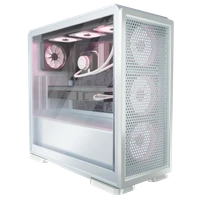



HP Z2 Mini G1a Jet Black 2025

Great Alternatives
These options also score highly and may better suit your specific needs
HP OMEN MAX 45L Shadow Black
Why we recommend this ▼
The AMD Ryzen 9 9900X3D, GeForce RTX 5090 32GB, and 128GB DDR5 deliver extreme frame rates and rendering power, sustained by a 360mm AIO and 1200W PSU. The 8TB NVMe SSD out of the box offers massive storage for AAA titles and 4K video projects without immediate upgrades. This desktop is best for competitive gamers, 3D artists, and AI developers requiring uncompromising compute and graphics performance.

HP OMEN MAX GT23-0990m Shadow black 2026
Why we recommend this ▼
Equipped with an AMD Ryzen 9 9900X3D and an RTX 5090 with 32GB VRAM, this micro-tower delivers top-tier rendering and AI performance backed by a 1200W PSU. Its patented Cryo Chamber cooling keeps the CPU up to 7.5% cooler under load, while 64GB of DDR5 memory and dual 2TB NVMe SSDs handle massive project files without bottlenecks. This system is best for AI researchers running large language models locally and 3D artists working with complex, GPU-intensive scenes.

HP Z6 G5
Why we recommend this ▼
The 20-core Intel Xeon w5-3525 and ECC DDR5 memory provide reliable, high-frequency processing for simulation and rendering, while the chassis supports up to three GPUs for significant future expansion. Its 1125W power supply and 10 USB-A ports offer robust connectivity and headroom for multiple add-in cards in a tool-less access design. This tower is best for engineers and data scientists running multi-threaded simulations or machine learning models who need a scalable, single-socket platform with ISV-certified stability.

HP Z8 Fury G5 Tower
Why we recommend this ▼
The 20-core Intel Xeon w5-3535X and NVIDIA RTX 2000 Ada with 16GB VRAM provide certified, stable performance for real-time ray tracing and complex simulations. Its tool-less chassis offers vast expansion headroom, supporting up to 2TB of ECC DDR5 RAM across sixteen DIMM slots for evolving project demands. This tower is best for engineers and data scientists running multi-threaded simulations or rendering tasks where data integrity and uptime are critical.

HP Z8 G5 Workstation Black 2000
Why we recommend this ▼
Dual 16-core Intel Xeon Silver 4514Y processors and 64GB of ECC DDR5 RAM deliver substantial multi-threaded throughput for rendering and simulation. The classic dual-socket chassis provides extensive internal expansion room, complemented by a professional NVIDIA RTX 2000 Ada GPU with 16GB of VRAM. This tower is best for engineers and data scientists running sustained, mission-critical parallel workloads where ECC memory reliability is non-negotiable.

HP Z6 G5 A Tower
Why we recommend this ▼
The 32-core AMD Ryzen Threadripper PRO 9975WX and 64GB of 6400 MHz DDR5 ECC RAM provide massive parallel processing power for heavily threaded workloads. Its tool-less chassis and 1125W PSU are ready for multiple high-end GPUs, making it a highly configurable foundation for expansion. This barebones workstation is best for IT departments and engineers who need to install their own specialized graphics cards for AI model training or complex 3D rendering.

HP ZGX Nano G1n Black 2026
Why we recommend this ▼
Combining an NVIDIA GB10 Grace Blackwell Superchip with 128GB of unified LPDDR5x memory, this 1.25kg mini workstation delivers 1,000 TOPS of local AI compute. Dual 200G QSFP112 ports allow pairing multiple units for scaled prototyping, while the curated open-source stack streamlines model export and local serving. It is best for AI developers needing a compact, deployment-ready system for fine-tuning and inferencing large models without cloud dependency.

HP Z4 G5 Black
Why we recommend this ▼
The Intel Xeon w5-2545 12-core processor and NVIDIA RTX 4000 Ada with 20GB VRAM provide certified reliability for multi-threaded rendering and simulation tasks. Its tower chassis offers extensive internal expansion and 10 USB-A ports, though the 16GB of ECC RAM is a minimal starting point for a system of this class. This workstation is best for engineers and data scientists running ISV-certified applications who need a stable, expandable platform rather than a compact desktop.

HP Z6 G5 Workstation Black

HP Z8 G5 Tower Black
Why we recommend this ▼
Dual 16-core Intel Xeon Silver 4514Y processors and 64GB of ECC DDR5 RAM deliver massive parallel throughput for multi-threaded simulation and rendering. The classic dual-socket chassis provides extensive expansion headroom, supporting up to 1TB of memory and RAID-capable storage for evolving data demands. This barebones system is best for scientific researchers and engineers who need raw CPU compute density and plan to install their own high-powered discrete GPUs.
